What Is Sex Addiction
Underlying many addictions are feelings related to depression, anxiety, trauma, narcissistic wounds from a deep sense of loss and, low self-worth.
Sex addiction is known as a “process addiction”. What that means is that you are addicted to some type of process; in this case sex. Eating, gambling, spending, and working are also examples of “process addictions”.
This is an important distinction from “substance addiction”. Sex addiction takes place in the brain beginning with fantasy or obsession, in this case about the sexual behavior. There is no way of detecting sex addiction outwardly. It cannot be easily observed by a partner or spouse. When someone suffers from substance abuse, you can smell alcohol on their breath, see that they have red eyes, or hear slurring of their speech. The visible signs of someone who is addicted to sex would appear in a much more subtle way.
Sex and Love Addiction in Men
Sex and Love Addiction in men refers to a pattern of compulsive pursuit of sexual activity, romantic intensity, or validation through relationships, often despite negative consequences. While it can sometimes be minimized as “normal male behavior,” this pattern goes far beyond a high sex drive or desire for connection. It is typically driven by underlying emotional needs and reinforced through cycles of obsession, acting out, and shame.
Men struggling with sex and love addiction may:
- Become preoccupied with romantic or sexual fantasies
- Chase the “high” of new relationships or sexual conquests
- Struggle to maintain stable, emotionally intimate partnerships
- Engage in infidelity or multiple concurrent relationships
- Confuse intensity, pursuit, or sexual chemistry with genuine intimacy
- Use sex or relationships to cope with stress, loneliness, or low self-worth
For many men, these patterns are rooted in early attachment wounds, emotional neglect, or trauma. Cultural conditioning can also play a role, as men are often discouraged from expressing vulnerability and instead may turn to sex or pursuit as a way to regulate emotions or feel a sense of power, worth, or control.
Left unaddressed, sex and love addiction can lead to repeated relational breakdowns, emotional isolation, and a fractured sense of identity. Recovery involves learning to tolerate vulnerability, developing emotional awareness, and building relationships based on authenticity rather than intensity or escape.
Sex and Porn Addiction in Men
Sex and Porn Addiction in men involves compulsive engagement with pornography, sexual behaviors, or fantasy that feels difficult or impossible to control. Over time, these behaviors often become a primary way of coping with stress, anxiety, boredom, or emotional discomfort.
This is not about occasional porn use or sexual expression. It becomes problematic when it interferes with daily functioning, relationships, self-esteem, or personal values.
Men struggling with sex and porn addiction may:
- Spend excessive time viewing pornography or engaging in sexual behaviors
- Experience a loss of control or repeated unsuccessful attempts to stop
- Escalate the type or intensity of content to achieve the same effect
- Prefer pornography or fantasy over real-life intimacy
- Struggle with sexual performance or arousal in partnered relationships
- Feel shame, guilt, or secrecy surrounding their behaviors
Neurologically, pornography can reinforce powerful reward pathways in the brain, creating cycles of craving and temporary relief. Emotionally, it can serve as a numbing strategy—allowing men to avoid difficult feelings such as inadequacy, rejection, or stress.
The impact can include relationship distress, decreased intimacy, isolation, and a growing disconnect between one’s behaviors and values.
Limerence, Sex Addiction, and Love Addiction
Limerence, sex addiction, and love addiction are deeply connected because they all involve compulsive patterns driven by dopamine, fantasy, emotional escape, and the pursuit of validation or relief.
Limerence is an intense emotional and psychological fixation on another person. It often includes obsessive thinking, idealization, fantasy, craving for reciprocation, emotional dependency, and extreme highs and lows based on attention or rejection. While it can feel like love, limerence is usually rooted more in longing, fantasy, and emotional survival than in genuine intimacy. Limerence goes far beyond having a crush or feeling excited about someone. It’s an intense emotional fixation fueled by dopamine and fantasy, often activating the same reward systems in the brain that are involved in addiction.
Sex addiction and love addiction can both use limerence as fuel.
In sex addiction, limerence may intensify compulsive sexual behaviors by creating obsessive fantasies, emotional urgency, and a constant search for stimulation or validation. The excitement of pursuit, secrecy, fantasy, or sexual connection can temporarily numb loneliness, anxiety, shame, or emotional pain. Over time, the brain begins to associate obsession and intensity with relief.
In love addiction, limerence often becomes the core experience. The addicted person may become emotionally dependent on the attention, approval, or presence of another person. Relationships can feel less about mutual connection and more about emotional survival, reassurance, or escaping inner emptiness. This can lead to chasing unavailable partners, ignoring red flags, confusing intensity with intimacy, or remaining attached to fantasy rather than reality.
All three experiences can activate the brain’s reward system in ways that resemble substance addiction. Dopamine spikes during anticipation, uncertainty, fantasy, pursuit, sexual acting out, or emotional validation create a cycle of craving and temporary relief. When the relationship, fantasy, or stimulation disappears, people may experience withdrawal-like symptoms including anxiety, depression, obsessive thoughts, emotional dysregulation, emptiness, or desperation to reconnect.
This is why people in recovery sometimes feel emotionally “high” in a new attachment and emotionally devastated when it ends. The nervous system may not be responding to healthy attachment — it may be responding to addiction patterns disguised as romance, chemistry, or connection.
Healing involves learning to separate intensity from intimacy, fantasy from reality, and emotional dependency from genuine love. Recovery often includes developing emotional regulation skills, building self-worth outside of relationships, recognizing compulsive patterns, and learning how to form secure, grounded connections rather than dopamine-driven attachments.
For people in recovery, this type of attachment can quietly become a replacement coping mechanism. Emotional dependence on another person can distract from healing, interfere with building healthy coping skills, and make it harder to recognize unhealthy dynamics or warning signs.
When the connection ends — or even when the fantasy no longer feels sustainable — the emotional crash can feel overwhelming. Many people experience emptiness, anxiety, emotional instability, or a sense of relapse, even if they’ve remained sober.
Sometimes the addiction is no longer centered around a substance. Sometimes it becomes centered around a person.
Instagram Reel from “Theaddictsdoc”: https://www.instagram.com/reel/DYmxbGLRoMA/?igsh=bXc2eDgwZWg0cXV0

Why does someone become a sex addict?
Sex addiction, like other forms of addiction, is a complex phenomenon with multiple contributing factors. Here are some of the potential reasons why someone may develop a sex addiction:
1. Biological factors: There may be genetic or neurobiological predispositions that make some individuals more vulnerable to developing addictive behaviors, including sex addiction. Changes in brain chemistry, such as alterations in dopamine levels, can influence the reward system and contribute to the development of addictive patterns.
2. Psychological factors: Underlying psychological issues, such as trauma, attachment disorders, low self-esteem, anxiety, depression, or unresolved conflicts, can drive individuals to seek solace or escape through compulsive sexual behavior. Sex addiction may serve as a coping mechanism for dealing with emotional pain or distress.
3. Environmental factors: Early exposure to sexual content, experiences of abuse or neglect, dysfunctional family dynamics, cultural or societal influences, and peer pressure can all play a role in the development of sex addiction. These environmental factors may shape an individual’s attitudes, beliefs, and behaviors related to sex and intimacy.
4. Social and cultural factors: Living in a society that promotes hypersexuality, glamorizes sexualized imagery, or places unrealistic expectations on sexual performance and desirability can contribute to the normalization of compulsive sexual behavior. Social media, pornography, and other forms of media can also influence perceptions of sex and relationships.
5. Past experiences: Traumatic experiences, such as sexual abuse, can profoundly impact an individual’s relationship with sex and intimacy. Some individuals may use compulsive sexual behavior as a way to regain a sense of control or power in response to past trauma.
6. Personality traits: Certain personality traits, such as impulsivity, sensation-seeking, perfectionism, or a predisposition towards risk-taking behavior, may increase the likelihood of developing addictive patterns, including sex addiction.
It’s important to recognize that sex addiction, like other forms of addiction, is a complex and multifaceted issue that cannot be attributed to any single cause. Instead, it typically results from a combination of biological, psychological, environmental, and social factors interacting with individual vulnerabilities and life experiences. Treatment for sex addiction often involves addressing these underlying factors through therapy, support groups, and other interventions aimed at promoting healing, self-awareness, and healthier coping strategies.
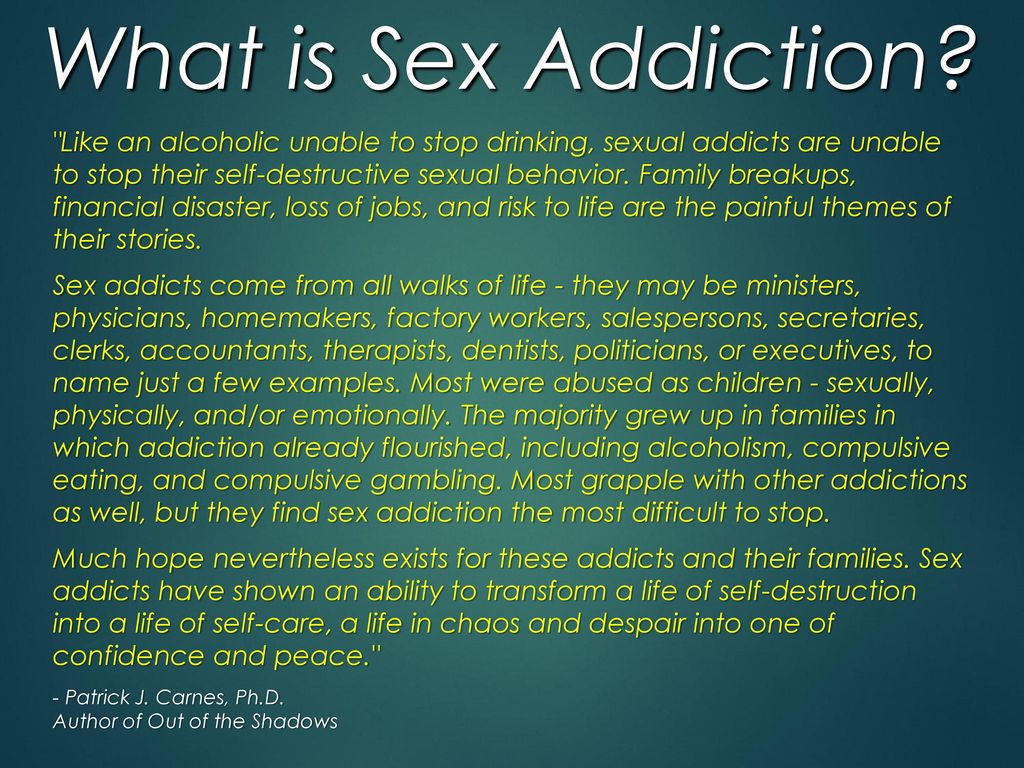
Some signs of sex addiction are as follows:
• Sexual behavior that is out of control; also referred to as “acting out”
• Experiencing severe consequences due to sexual behavior, despite trying to stop
• A willingness to continue the self-destructive behavior
• An ongoing effort or desire to limit sexual behavior which often serves to fuel the addiction
• Sexual obsession and fantasy as a coping strategy
• Escalating sexual experiences when the current level of activity is no longer sufficient
• Severe mood changes relating to sexual activity
• Excessive time devoted to obtaining sex, being sexual, and recovering from sexual experiences
• Neglect of significant activities in relationships, career, and social life because of sexual behavior
Out of Control Sexual Behavior: A Sexual Health Approach to Regaining Control
A compassionate, non-shaming way to understand sexual behavior that feels hard to manage
Many people seek help because their sexual thoughts, urges, pornography use, online behavior, hookups, affairs, or sexual decision-making no longer feel aligned with who they want to be. They may feel scared, ashamed, confused, or worried that they are “addicted to sex.”
The Out of Control Sexual Behavior model, often called OCSB, offers another way to understand the problem. Developed by Doug Braun-Harvey and Michael Vigorito, the OCSB model approaches these concerns through a sexual health, values-based, and behavior-change lens rather than assuming that all distressing or unwanted sexual behavior is an addiction.
OCSB does not ask, “What is wrong with you?”
It asks, “What is happening, what does sexual health mean for you, and what would help you make choices that fit your values, relationships, and goals?”
What Is the OCSB Model?
Out of Control Sexual Behavior refers to consensual sexual thoughts, urges, or behaviors that a person experiences as difficult to control and distressing or harmful in their life.
This may include concerns related to:
- Pornography use
- Compulsive masturbation
- Sexual messaging, apps, or online behavior
- Affairs or secrecy in relationships
- Repeated hookups that feel misaligned with personal values
- Risky sexual decisions
- Difficulty stopping despite promises to oneself or a partner
- Sexual behavior used to cope with stress, loneliness, shame, anxiety, trauma, or emotional pain
The OCSB model does not treat sexual desire itself as the problem. It does not assume that high libido, kink, consensual non-monogamy, LGBTQ+ sexuality, masturbation, porn use, or casual sex are automatically unhealthy.
Instead, the focus is on whether the behavior is:
- Consensual
- Legal
- Aligned with the person’s values
- Emotionally and relationally manageable
- Physically and sexually safe
- Connected to a broader sense of sexual health
How Is OCSB Different From “Sex Addiction”?
The traditional “sex addiction” model often describes problematic sexual behavior as an addiction process similar to alcohol or drug addiction. Some people find that framework helpful, especially if they connect with 12-step recovery language, abstinence-based tools, or peer support communities.
The OCSB model differs in several important ways:
1. OCSB avoids making “addict” the primary identity
Instead of labeling someone as a sex addict, OCSB describes the behavior as something the person is struggling to manage. This can reduce shame and help the person focus on change rather than identity.
2. OCSB is sex-positive and non-pathologizing
OCSB does not assume that certain sexual interests, desires, fantasies, or relationship structures are inherently unhealthy. The question is not “Is this behavior sexually normal?” The better question is, “Is this behavior helping or hurting your life, relationships, safety, and values?”
3. OCSB focuses on values, choice, and sexual health
The goal is not necessarily lifelong abstinence from all sexual behavior. The goal is to help the person develop a sexual life that is consensual, responsible, pleasurable, safe, honest, and aligned with their values.
4. OCSB uses behavior-change strategies
OCSB treatment often uses motivational interviewing and stages-of-change concepts. That means therapy explores ambivalence, readiness, triggers, patterns, consequences, and practical steps for change.
5. OCSB is not only about stopping behavior
Stopping a harmful pattern may be part of the work, but the deeper goal is building a healthier sexual life. That may include emotional regulation, relationship honesty, sexual communication, boundaries, accountability, and reducing shame.
How Is OCSB Similar to Sex Addiction Treatment?
OCSB and sex addiction treatment can overlap in several ways. Both recognize that some people experience sexual behavior as repetitive, distressing, secretive, risky, or difficult to stop.
Both approaches may address:
- Loss of control
- Repeated unsuccessful attempts to stop or cut back
- Consequences in relationships, work, finances, health, or emotional well-being
- Shame, secrecy, lying, or hiding
- Escalating behavior over time
- Using sex or pornography to cope with difficult emotions
- Relapse patterns
- Need for accountability and support
The main difference is the framework. Sex addiction treatment may use addiction language. OCSB uses a sexual health and behavior-change framework.
For some people, the addiction model feels validating. For others, it increases shame or does not fit their experience. The most helpful approach is usually the one that supports honest reflection, responsibility, compassion, and meaningful change.
Common Signs That Sexual Behavior May Be Out of Control
You may want to seek support if you notice patterns such as:
- You repeatedly promise yourself or a partner that you will stop, but the pattern continues.
- Sexual thoughts, porn use, messaging, hookups, or fantasies take up significant time or mental energy.
- You hide, lie, delete evidence, or keep secrets about sexual behavior.
- The behavior conflicts with your values or relationship agreements.
- You continue even after painful consequences.
- You feel shame, guilt, anxiety, or emotional distress afterward.
- Sexual behavior is used to numb stress, loneliness, anger, grief, boredom, or insecurity.
- The behavior becomes more frequent, intense, risky, or difficult to interrupt.
- You neglect work, school, sleep, health, finances, or relationships because of the behavior.
- You feel like your sexual choices are controlling you instead of you choosing them.
A strong sex drive alone does not mean someone has OCSB. The concern is not simply frequency. The concern is distress, loss of control, misalignment with values, secrecy, risk, and negative impact.
A Sexual Health Lens: What Recovery Can Look Like
In the OCSB model, recovery is not about becoming anti-sex. It is about developing a healthier relationship with sexuality.
That may include learning to:
- Understand triggers and high-risk situations
- Pause before acting on urges
- Make sexual decisions that match your values
- Communicate honestly with partners
- Repair trust after secrecy or betrayal
- Set realistic boundaries around porn, apps, messaging, or hookups
- Reduce shame without avoiding accountability
- Build emotional coping skills that do not rely only on sex
- Create a sexual life that includes consent, safety, pleasure, respect, and integrity
What Kind of Help Should I Look For?
When looking for support, consider providers or resources that are:
Sex-positive and non-shaming
Look for someone who can talk about sexuality without moralizing, judging, or assuming that all sexual desire is pathological.
Trained in sexual health or sex therapy
Helpful credentials or training may include:
- AASECT-certified sex therapist, counselor, or educator
- Licensed mental health professional with sex therapy training
- Therapist familiar with OCSB, compulsive sexual behavior, betrayal trauma, relationship repair, or problematic pornography use
Comfortable with both accountability and compassion
Good treatment should not excuse harmful behavior, but it should also not rely on shame. The best support helps people take responsibility while understanding the emotional, relational, and behavioral patterns underneath the behavior.
Able to assess the whole picture
A qualified provider may explore:
- Anxiety, depression, ADHD, OCD, trauma, or substance use
- Relationship distress
- Sexual shame or rigid beliefs about sex
- Family or religious background
- Attachment patterns
- Emotional regulation skills
- Consent, safety, and risk
Helpful Resources to Explore
Books
Treating Out of Control Sexual Behavior: Rethinking Sex Addiction
By Doug Braun-Harvey and Michael Vigorito
A foundational book for understanding the OCSB model and sexual health approach.
What is Porn-Induced Erectile Dysfunction?
Porn-induced erectile dysfunction (PIED) is a term used to describe a phenomenon where individuals experience difficulty achieving or maintaining an erection during sexual activity with a partner, but not necessarily during masturbation to pornography. It is believed to occur as a result of excessive consumption of pornography, particularly internet pornography, which can lead to changes in sexual arousal patterns and expectations.
- Excessive Pornography Consumption: Individuals who regularly consume pornography, especially high-speed internet pornography, may develop a tolerance to the content and seek out increasingly stimulating material to achieve the same level of arousal. This can lead to frequent and prolonged exposure to highly arousing, novelty-driven sexual stimuli.
- Desensitization: Over time, the repeated exposure to intense sexual stimuli can desensitize the brain’s reward system, leading to a blunted response to normal sexual cues and a decrease in sensitivity to natural sexual stimuli. This desensitization can manifest as difficulty becoming aroused or achieving orgasm during real-life sexual encounters.
- Rewiring of Sexual Response: The brain’s reward circuitry can become wired to respond primarily to the specific cues and stimuli present in pornography, rather than to the more nuanced and varied sensory experiences of real-life sexual encounters. As a result, individuals may find it challenging to become sexually aroused or maintain arousal in the absence of pornographic stimuli.
- Performance Anxiety: Individuals experiencing PIED may also develop performance anxiety or self-doubt during sexual encounters, fearing that they will be unable to achieve or maintain an erection, which can further exacerbate erectile dysfunction.
It’s important to note that while excessive pornography consumption may contribute to erectile dysfunction in some individuals, it is not the sole cause of all cases of erectile dysfunction. Other factors, such as stress, relationship issues, medical conditions, medications, and psychological factors, can also play a role in erectile dysfunction.
Treatment for porn-induced erectile dysfunction typically involves reducing or eliminating pornography consumption, addressing underlying psychological factors such as anxiety or low self-esteem, and exploring healthy sexual behaviors and communication strategies within intimate relationships. Therapy, support groups, and lifestyle changes may also be recommended to support recovery and promote healthier sexual functioning.
How is porn erectile dysfunction and sex addiction connected?
Porn-induced erectile dysfunction (PIED) and sex addiction are connected through their shared impact on sexual arousal, behavior, and dysfunction.
- Common Underlying Factors: Both PIED and sex addiction can be influenced by similar underlying factors, such as excessive consumption of pornography, distorted perceptions of sex and relationships, and compulsive sexual behaviors driven by the need for arousal or gratification.
- Pornography as a Trigger: In cases of sex addiction, pornography often serves as a primary trigger for compulsive sexual behavior. Individuals with sex addiction may use pornography as a means of seeking sexual stimulation and gratification, leading to excessive consumption and potential desensitization to sexual stimuli over time.
- Escalation of Behavior: In both PIED and sex addiction, there can be a pattern of escalation where individuals seek out increasingly extreme or novel forms of sexual stimulation to achieve the same level of arousal or gratification. This escalation can contribute to the development of tolerance, desensitization, and difficulties with sexual functioning.
- Impact on Sexual Functioning: Excessive pornography consumption and compulsive sexual behavior can both have negative effects on sexual functioning, including erectile dysfunction, decreased libido, and difficulties with arousal and orgasm. In the case of PIED, these effects may be specifically linked to the desensitization and rewiring of the brain’s reward system in response to pornographic stimuli.
- Psychological and Emotional Factors: Both PIED and sex addiction can be influenced by underlying psychological and emotional factors, such as anxiety, depression, low self-esteem, and unresolved trauma. These factors may contribute to the development and maintenance of addictive patterns of behavior and dysfunction.
- Treatment Approaches: Treatment for both PIED and sex addiction often involves addressing underlying psychological factors, reducing or eliminating problematic sexual behaviors, and promoting healthier attitudes and behaviors related to sex and intimacy. Therapeutic approaches may include cognitive-behavioral therapy, mindfulness-based techniques, relapse prevention strategies, and couples therapy.
It’s important to recognize that while there is overlap between PIED and sex addiction, not everyone who experiences PIED will have a diagnosable sex addiction, and vice versa. Each individual’s experience is unique, and treatment approaches should be tailored to address their specific needs, concerns, and goals for recovery.
Understanding Porn-Induced Erectile Dysfunction
Adapted from Sexual Dysfunction by Scott Brassart.
For males, porn-induced erectile dysfunction, sometimes referred to as PIED, is among the most common consequences of porn addiction. Research suggests that erectile dysfunction (ED) and other forms of male sexual dysfunction like delayed ejaculation (DE), and anorgasmia (the inability to reach orgasm) occur in anywhere from 17% to 58% of all male sex/porn addicts. The more porn one uses, the more likely it is to experience sexual dysfunction.
Simply stated, growing numbers of physically healthy men, including men in their sexual prime, are suffering from sexual dysfunction – typically with real-world partners rather than with porn – and their dysfunction is directly related to their abuse of online pornography. This issue is not entirely due to the frequency of masturbation and orgasms outside of a primary relationship (i.e., the need for a sexual refractory period in which males “reload,” so to speak). In reality, the problem is increasingly related to the fact that when a man spends most of his sexual life masturbating to online porn – endless images of sexy, exciting, constantly changing partners and experiences – he is, over time, likely to find a real-world partner less sexually stimulating than the endless variety of visuals he finds online. Basically, digital pornography creates an emotional and psychological disconnection that manifests physically as sexual dysfunction with real-world partners.
In their paper, Evaluation and Treatment of Sex Addiction, Kenneth Rosenberg, Patrick Carnes, and Suzanne O’Connor state the matter rather clearly, writing, “Sex addiction patients are generally not good at sex. They function poorly in the bedroom. Sex addicts feverishly pursue their dysfunctional sexual behaviors yet generally have sexual difficulties with intimate partners…. Premature ejaculation, erectile dysfunction [and] anorgasmia … are common.” This is most apparent when sex addicts are hooked primarily on pornography.
Possible signs of porn-induced male sexual dysfunction include:
- A man is able to achieve erections and orgasms with pornography, but he struggles with one or both when he’s with a real-world partner.
- A man is able to have sex and achieve orgasm with real-world partners, but reaching orgasm takes a long time and his partners complain that he seems disengaged.
- A man is able to maintain an erection with real-world partners, but he can only achieve orgasm by replaying porn clips in his mind.
- A man increasingly prefers pornography to real-world sex, finding it more intense and more engaging.
- Thanks to heavy porn use, growing numbers of men are suffering from sexual dysfunction, be it ED, DE, or anorgasmia. Even worse, male sexual dysfunction affects not just men but their romantic partners. The partner of a person suffering from compulsive sexual behavior may experience diminished sexual pleasure due to the Sex Addict’s acting out.
If you or a loved one are dealing with porn addiction, with or without sexual dysfunction, I can help your coupleship.
Recovering from Sex Addiction Using Patrick Carnes’s 30 Tasks
Patrick Carnes is a well-known expert in the field of sex addiction and has developed various frameworks and strategies for recovery. One of his notable contributions is the “30 Tasks of Recovery,” which outlines a comprehensive approach to overcoming sex addiction. These tasks are designed to help individuals address underlying issues, develop healthier coping mechanisms, and rebuild their lives in a more fulfilling way.
Here is a summary of the tasks:
- Acknowledge powerlessness over addictive sexual behavior.
- Recognize the unmanageability of life as a result of sexual compulsivity.
- Turn your life over to a higher power or a supportive community.
- Conduct a thorough self-assessment of your sexual history and behavior.
- Develop honesty about your sexual thoughts, fantasies, and behaviors.
- Make a list of people harmed by your sexual behavior and make amends to them.
- Seek out a therapist or support group specializing in sex addiction recovery.
- Accept responsibility for your actions and their consequences.
- Develop empathy and understanding for those affected by your behavior.
- Practice rigorous honesty in all areas of your life.
- Develop a plan for managing triggers and cravings.
- Establish healthy boundaries in relationships.
- Learn to identify and express your emotions in a healthy way.
- Address any underlying trauma or emotional issues contributing to your addiction.
- Develop a relapse prevention plan.
- Cultivate self-compassion and forgiveness.
- Practice mindfulness and self-awareness.
- Engage in activities that promote physical and emotional well-being.
- Explore spirituality or develop a connection with a higher power.
- Cultivate healthy sexuality and intimacy.
- Build a supportive network of friends and family.
- Practice gratitude and focus on the positive aspects of life.
- Engage in ongoing self-improvement and personal growth.
- Take responsibility for your ongoing recovery process.
- Share your experiences and insights with others in recovery.
- Stay accountable to yourself and others.
- Develop healthy coping mechanisms for stress and difficult emotions.
- Work on rebuilding trust in relationships.
- Set goals for your future and work towards them.
- Embrace a lifelong commitment to recovery and personal development.
These tasks are not meant to be completed in a linear fashion but rather as ongoing processes that support long-term recovery from sex addiction. Individuals may work on multiple tasks simultaneously and revisit them as needed throughout their journey.
What does recovery from sex addiction generally consist of?
1. Individual therapy
2. Couple/Family therapy
3. 12 Step support group work
4. Group therapy
Pornography, Sexual Media Consumption, and Out of Control Sexual Behavior
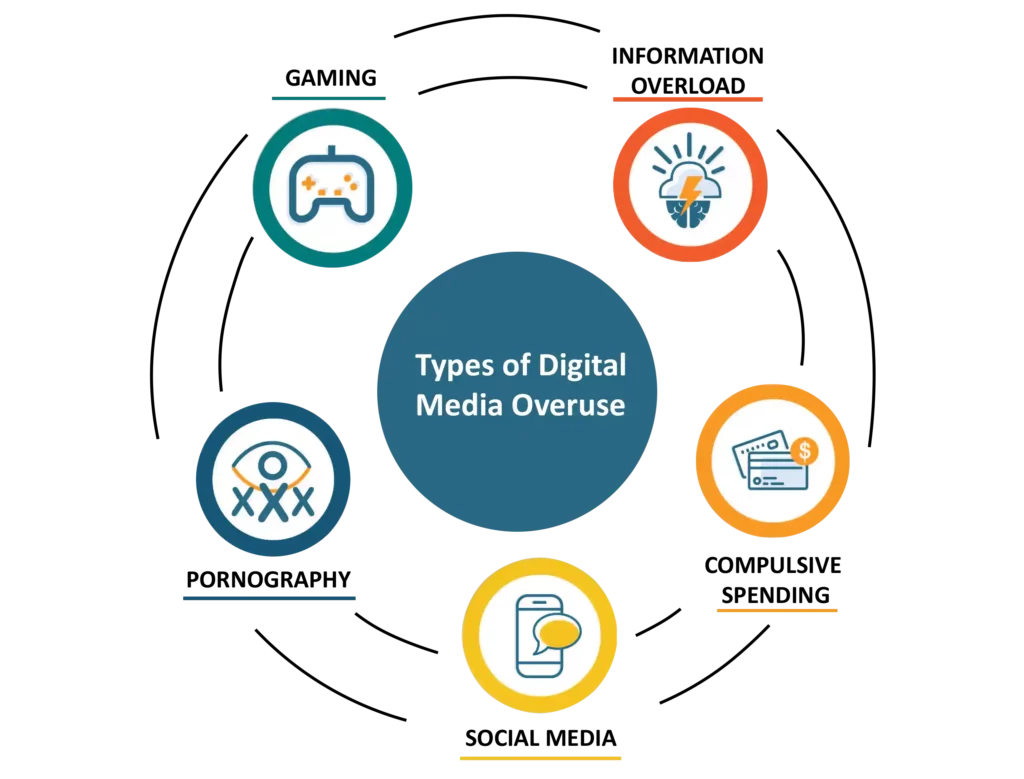
Digital Media Overuse (DMO) refers to compulsive or difficult-to-control engagement with digital platforms, particularly pornography, sexual content platforms, explicit online material, cam sites, hookup applications, and other forms of online sexual stimulation. While sexual media consumption may be a healthy or recreational part of sexuality for some individuals, it can become problematic when it begins functioning as a primary coping mechanism for stress, anxiety, loneliness, depression, emotional discomfort, boredom, shame, or relational distress.
Many individuals struggling with compulsive pornography or sexual media use describe patterns of repeatedly turning to explicit content as a form of emotional escape, self-soothing, distraction, or stimulation. Over time, the brain can begin associating sexual media with temporary relief or emotional regulation. Digital sexual content is uniquely reinforcing because it combines novelty, accessibility, immediacy, privacy, and endless stimulation. Dopamine, the neurotransmitter involved in motivation and reward, plays a significant role in reinforcing these behaviors, similar to other compulsive or addictive patterns. Individuals may also experience “flow,” a psychological state of deep immersion in which awareness of time, consequences, and self-control becomes diminished.
This overlap between compulsive pornography use and Sex Addiction is increasingly understood through the Out of Control Sexual Behavior (OCSB) model developed by Doug Braun-Harvey and Michael Vigorito. The OCSB model moves beyond simple labels and instead examines whether sexual behaviors feel out of control, conflict with a person’s values, damage relationships, interfere with occupational or academic functioning, or contribute to emotional distress and shame. The model recognizes that problematic sexual behavior often exists within a larger emotional and relational context involving attachment wounds, trauma, anxiety, isolation, compulsivity, and difficulties with emotional regulation.
Compulsive sexual media use may include:
- Repeated pornography use despite attempts to reduce or stop
- Escalation in time spent consuming explicit content
- Using pornography to cope with stress, loneliness, anxiety, or emotional pain
- Secretive or shame-driven online sexual behavior
- Difficulty controlling urges to search for or consume sexual material
- Interference with intimacy, relationships, work, school, or daily functioning
- Emotional numbness, guilt, shame, or distress following use
Treatment focuses on helping individuals better understand the emotional and behavioral function of their sexual media use while developing healthier coping strategies, emotional awareness, self-regulation skills, and relationship patterns. Therapy may include behavioral interventions, sexual health education, trauma-informed therapy, mindfulness-based approaches, harm reduction or abstinence goals, accountability systems, and support groups depending on the individual’s needs and values.
The goal of treatment is not shame or punishment surrounding sexuality. The goal is to help individuals regain a sense of choice, emotional balance, healthy intimacy, and control over behaviors that no longer align with their values or well-being.
Learn more about Digital Media Overuse at Digital Media Overuse Scale
Digital Media Treatment & Education Center
Types of Digital Media Overuse
The graphic below, provided by the Digital Media Treatment & Education Center, highlights several common forms of Digital Media Overuse (DMO), including compulsive pornography and sexual media use, video gaming, social media engagement, online spending/gambling behaviors, and excessive digital communication.
These behaviors can become problematic when they begin interfering with emotional well-being, relationships, work, academics, sleep, intimacy, or daily functioning.
Digital Wellness & Accountability Tools
These tools may support healthier boundaries and reduce compulsive access patterns:
- Covenant Eyes — Accountability and content-monitoring software.
- Canopy — Filtering and digital safety tools.
- Freedom — Website and app blocker for reducing compulsive browsing patterns.
- Opal — Screen time and distraction management application.
Healthy Recovery Supports
Recovery often improves when individuals also strengthen:
- Sleep hygiene
- Physical activity and exercise
- In-person relationships and community
- Stress management skills
- Emotional awareness and communication
- Mindfulness and grounding practices
- Structured routines and reduced isolation
Bill Herring PSB Framework
Bill Herring’s Problematic Sexual Behavior (PSB) Framework
The Problematic Sexual Behavior (PSB) Framework developed by Bill Herring is a descriptive, theory-neutral framework designed to help clinicians, facilitators, and individuals better understand problematic sexual behavior without relying solely on diagnostic labels like “sex addiction.”
The framework focuses on five core conversational domains:
- Commitment Violations
“Are you keeping your promises?” - Values Conflicts
“Are you OK with what you are doing?” - Diminished Self-Control
“Are you in control of your behavior?” - Negative Consequences
“Is everything OK?” - Lack of Sexual Responsibility
“Are you protecting others?”
Rather than focusing on labeling behavior as “addiction” or “pathology,” the PSB Framework emphasizes:
- Behavioral patterns
- Relational impact
- Accountability
- Sexual health
- Personal integrity
- Emotional awareness
- Responsibility toward others
The framework is intentionally:
- Descriptive rather than diagnostic
- Theory-neutral
- Flexible and adaptable
- Applicable across multiple clinical models
- Usable in both clinical and support group settings
PSB Group Training Manual
What Is the PSB Group Training Manual?
The PSB Group Facilitator Training Manual is a structured educational and facilitation guide created by Bill Herring for mental health professionals and group facilitators working with problematic sexual behavior.
The manual:
- Explains the PSB Framework in depth
- Provides facilitator guidance
- Outlines group structures and session flow
- Teaches practical interventions
- Integrates trauma-informed approaches
- Helps facilitators increase accountability, empathy, and behavioral awareness in group settings
The manual is intended primarily for:
- Therapists
- Group facilitators
- Addiction counselors
- CSATs
- Trauma-informed clinicians
- Sexual health professionals
- Support group leaders
What the Manual Covers
Key sections include:
- Foundations of the PSB Framework
- Understanding problematic sexual behavior
- Commitment violations and relational integrity
- Values conflicts
- Diminished self-control
- Negative consequences
- Responsibility to others
- Trauma integration
- Group facilitation skills
- Accountability development
- Empathy-building
- Managing shame and minimization
- Sample 90-minute group session structures
- Facilitation pitfalls and best practices
How the PSB Framework Can Be Used
Clinical Therapy
The framework can help clinicians:
- Organize assessment conversations
- Reduce shame-based labeling
- Explore sexual behavior patterns
- Increase emotional accountability
- Integrate multiple therapeutic models
Group Therapy
The PSB model is especially designed for:
- Process groups
- Men’s groups
- Pornography recovery groups
- Infidelity recovery work
- Relationship accountability groups
- Trauma-informed sexual health groups
The framework provides a shared language that improves:
- Clarity
- Consistency
- Communication
- Peer accountability
- Emotional insight
Self-Assessment & Personal Growth
The five-domain model can also function as:
- A life-integrity framework
- A self-awareness tool
- A recovery journaling structure
- A relational accountability system
- A behavioral reflection model
The manual specifically discusses how the five domains can be applied beyond sexuality to:
- Spending
- Gambling
- Overwork
- Social media use
- Relationships
- Emotional regulation
- Personal integrity patterns
Key Features of the PSB Framework
The framework is intentionally:
- Inclusive and integrative
- Not dependent on addiction language
- Flexible across belief systems
- Focused on impact rather than moral judgment
- Centered on relational and behavioral responsibility
The manual also emphasizes that:
- Someone does not need to identify as a “sex addict” to benefit from treatment
- Multiple explanatory models can coexist
- Trauma, attachment, addiction, integrity, and behavioral models can all be integrated together
Alternating Sounds – Bill Herring
Alternating Sounds is a resource and educational platform connected to work surrounding:
- Problematic sexual behavior
- Sexual health
- Recovery frameworks
- Emotional regulation
- Group facilitation
- Trauma-informed approaches
- Clinical education
The site includes:
- Educational materials
- Articles and concepts related to PSB
- Clinical and facilitator resources
- Framework explanations
- Sexual health and accountability concepts
- Recovery-oriented discussion models
It can serve as:
- A clinician education resource
- A supplemental learning tool for clients
- A reference point for group facilitators
- A framework integration resource for therapy and recovery work
Core Philosophy of the Framework
A major theme throughout the PSB Framework is that problematic sexual behavior should be approached through:
- Curiosity rather than condemnation
- Accountability rather than shame
- Responsibility rather than labeling
- Behavioral understanding rather than rigid diagnosis
The framework encourages conversations focused on:
- Integrity
- Consent
- Emotional congruence
- Relational impact
- Self-awareness
- Accountability
- Sustainable behavioral change
Reference Document
PSB Group Facilitator Training Manual — Pilot Edition (Version 1.3), April 18, 2026 by Bill Herring
RESOURCES
WEBSITES:
- Willow Tree Counseling: An Introduction to Sex Addiction and Betrayal – “This course is an introduction to sex addiction and partner betrayal. It is broken into 15 video segments which provide over 2 hours of information. We will explain what sex addiction is from a behavioral and a neurological perspective. We will also discuss the relationship of trauma and sex addiction as well as the effective treatment of sex addiction. The betrayed partner’s experience will be explored. This will look at the trauma experienced as the partner of a sex addict as well as understanding the process of healing as a betrayed partner. Lastly, this course discuss the importance of therapeutic disclosure and what effective healing for the relationship looks like. See the curriculum below for a more detailed list of topics.”
- SAA RECOVERY – Am I a Sex Addict? – “SAAA fellowship of individuals who share their experience, strength, and hope with each other so they may overcome their sexual addiction and help others recover from sexual addiction or dependency.”
- Addiction Center – Sex Addiction Symptoms and Who it Effects – “Addiction Center – Your Guide for Addiction and Recovery”
- Sex and Relationship Healing- Resources, Webinars, and Discussion Groups for Addicts and Partners – “You Deserve a Healthy and Loving Relationship – This is a free resource website provided by the treatment experts at Seeking Integrity.”
- Sex Help – Resources for Sex Addicts and Partners of Sex Addicts – “The International Institute of Trauma and Addiction Professionals (IITAP) is an organization dedicated to providing premier training, certification and resources for sexual addiction practitioners. Through IITAP, those suffering from a sexual addiction or compulsive behavior have access to certified practitioners, resources, treatment options and referrals to get the help they need.”
- Matt Dobschuetz – “Host of the Porn Free Radio Podcast and Author of Porn Free: Becoming The Type Of Man Who Does Not Look At Porn“
- Sex and Love Addicts Anonymous (SLAA) – A 12-step group focused more on patterns of relationships, intimacy, and attachment. Helpful if your struggles involve relationships, not just behaviors.
- Fight the New Drug – Provides research-based education on the effects of pornography on the brain and relationships. Very accessible and easy to understand.
BOOKS AND WORKBOOKS:
- Out of the Shadows by Patrick Carnes –A foundational book that explains what sex addiction is, how it develops, and how recovery works. Many people consider this the “starting point” for understanding the issue.
- The Porn Trap by Wendy & Larry Maltz – A practical guide focused specifically on pornography use. Includes strategies, real-life examples, and steps for change.
- Your Brain on Porn by Gary Wilson – Explains how pornography affects the brain, habits, and motivation. Helpful if you want to understand the science behind behavior patterns.
- Facing the Shadow by Patrick Carnes – A step-by-step workbook used in many treatment programs. Helps you identify patterns, triggers, and create a structured recovery plan.
- Recovery Zone by Patrick Carnes – Focuses on boundaries, relapse prevention, and building a stable recovery lifestyle.
- Porn Free by Matt Dobschuetz – A motivational and practical guide to becoming the kind of person who no longer relies on porn. Focuses on identity and habits.
- Out of the Doghouse – Robert Weiss – Written for the partner who caused the betrayal. Focuses on accountability, empathy, and rebuilding trust.
- Hold Me Tight – Sue Johnson – A relationship-focused book that helps couples rebuild emotional connection using proven therapy methods.
PODCAST EPISODES:
- Sex, Love & Addiction with Dr. Rob Podcast – Episode: Bonus: Am I Just Having Fun, or is This a Full-Blown Addiction?
- Sex, Love & Addiction with Dr. Rob Podcast – Episode: Part 1 – How Do You Become a Sex Addict?
- Sex, Love & Addiction with Dr. Rob Podcast – Episode: Part 2 – How Do You Become a Sex Addict?
- Sex, Love & Addiction with Dr. Rob Podcast – Episode: Part 1 – Porn Addiction 101: The Problem with Scott Brassart
- Sex, Love & Addiction with Dr. Rob Podcast – Episode: Part 2 – Porn Addiction 101: The Problem with Scott Brassart
- Sex, Love & Addiction with Dr. Rob Podcast – Episode: What is Sex Addition and What is it Not?
- Sex, Love & Addiction with Dr. Rob Podcast – Episode: Overcoming the Shame of Porn Addiction & Seeking Help — Dr. Rob Weiss on The Mel Robbins Show
- Sex, Love & Addiction with Dr. Rob Podcast – Episode: Let’s Talk About Porn Addiction — Dr. Rob Weiss on The Doctors TV Show
- Sex, Love & Addiction with Dr. Rob Podcast – Episode: What Men Caught Cheating Need To Know with Dr. Rob and Tami
- Sex, Love & Addiction with Dr. Rob Podcast – Episode: Addicted to Internet Porn with Noah Church
- Sex, Love & Addiction with Dr. Rob Podcast – Episode: Cruise Control: Understanding Sex Addiction in Gay Men with Dr. Rob
- Sex, Love & Addiction with Dr. Rob Podcast – Episode: Women in Sex and Love Addiction with Staci Sprout
- Conversations on Sex, Addiction, and Relationships Podcast – Episode: Physical Symptoms of Sex Addiction and Betrayal Trauma
- Conversations on Sex, Addiction, and Relationships Podcast – Episode: Healing After Sex Addiction Betrayal: Navigating Sex Addiction in Relationships
- Conversations on Sex, Addiction, and Relationships Podcast – Episode: Is an Affair Sex Addiction?
How a Parent’s Sex Addiction Impacts Their Children
A parent’s sex addiction—whether involving compulsive sexual behavior, pornography use, or patterns of infidelity—can have a profound and often lasting impact on children. Even when children are not directly aware of the behaviors, they are highly attuned to emotional undercurrents in the home. Secrecy, inconsistency, and relational instability do not stay contained—they shape a child’s sense of safety, attachment, and self-worth.
Emotional and Psychological Impact
Children of a parent struggling with sex addiction may experience:
- Insecurity and confusion due to unpredictability in the parent’s behavior or availability
- Emotional neglect, as the addicted parent may be preoccupied, distracted, or unavailable
- Anxiety or hypervigilance, sensing that something is “not right” but not understanding why
- Shame and secrecy, especially if the issue is hidden or never discussed openly
- Distorted self-worth, sometimes internalizing the dysfunction as something they caused
If the addiction leads to betrayal within the parental relationship, children may also be affected by the emotional fallout—tension, conflict, or disconnection between caregivers.
Attachment and Relationship Patterns
Children learn about relationships by observing their parents. When sex addiction is present, it can model:
- Unhealthy or unstable relationship dynamics
- Confusion between love, secrecy, and intensity
- Difficulty with trust and emotional safety
As adults, these children may struggle with intimacy, boundaries, or may unconsciously repeat similar relational patterns—either through over-attachment or avoidance.
Premature Exposure and Boundary Violations
In some cases, children may be exposed—directly or indirectly—to sexual content, conversations, or behaviors that are not age-appropriate. This can be deeply confusing and may:
- Accelerate or distort their understanding of sexuality
- Create discomfort, fear, or curiosity without guidance
- Blur appropriate boundaries within the family system
Even unintentional exposure (e.g., discovering pornography) can have a significant emotional impact.
The Role of Secrecy and Silence
One of the most harmful aspects is often the silence surrounding the issue. When children sense something is wrong but it is never acknowledged, they may:
- Doubt their own perceptions
- Learn to suppress feelings or avoid difficult conversations
- Develop a family role (e.g., caretaker, peacemaker, or “invisible child”) to maintain stability
Long-Term Effects
Without support or intervention, these early experiences can contribute to:
- Difficulty trusting others
- Challenges with emotional regulation
- Increased risk of anxiety, depression, or compulsive behaviors
- Vulnerability to their own relational or addictive patterns
Healing and Support
It’s important to emphasize that children are resilient, and the presence of one struggling parent does not determine their future. Protective factors—such as a stable caregiver, supportive relationships, and therapeutic intervention—can significantly buffer the impact.
Healing may include:
- Age-appropriate honesty and open communication
- Family or individual therapy
- Education about healthy relationships and boundaries
- Support for the non-addicted parent to create consistency and safety
When addressed with honesty, accountability, and support, families can begin to repair and rebuild. Children benefit most not from perfection, but from environments where truth, safety, and emotional connection are restored.
Female Sex and Love Addiction
Female Sex and Love Addiction (often referred to as SLAA) is a complex and often misunderstood pattern of behavior in which a woman becomes emotionally and/or sexually dependent on relationships, romantic intensity, or validation from others. While the behaviors may differ from person to person, the underlying struggle is rooted in a deep longing for connection, safety, and self-worth.
Unlike common stereotypes, this is not simply about “wanting love” or being overly romantic. It is a cycle that can involve compulsive relationship-seeking, staying in unhealthy or even harmful dynamics, difficulty being alone, or using sex and intimacy as a way to regulate emotions or feel valued.
Common Signs and Patterns
Women experiencing sex and love addiction may:
- Feel a persistent need to be in a relationship or “in love”
- Confuse intensity or chemistry with true intimacy
- Stay in relationships despite red flags, betrayal, or emotional unavailability
- Experience obsessive thinking about a partner or potential partner
- Use sex, seduction, or attention to gain validation or avoid abandonment
- Struggle with boundaries, often prioritizing others’ needs over their own
- Feel empty, anxious, or depressed when not in a relationship
The Underlying Causes
These patterns are often rooted in early attachment wounds, trauma, neglect, or inconsistent caregiving. For many women, love and attention became intertwined with survival, self-worth, or emotional regulation. As adults, this can manifest as a powerful pull toward relationships that recreate familiar emotional dynamics—even when they are painful.
Cultural messaging can also play a role. Women are often socialized to equate worth with desirability, partnership, or being “chosen,” which can reinforce these patterns and make them harder to recognize.
The Impact
Left unaddressed, sex and love addiction can lead to cycles of heartbreak, loss of identity, emotional exhaustion, and diminished self-esteem. It may also impact other areas of life, including friendships, family relationships, and professional stability.
Healing and Recovery
Recovery is possible and centers on developing a secure sense of self, learning healthy attachment, and building the capacity for authentic intimacy. This process often includes:
- Understanding personal patterns and attachment style
- Healing underlying trauma and emotional wounds
- Establishing and maintaining healthy boundaries
- Learning to tolerate solitude without distress
- Redefining intimacy beyond intensity or validation
- Cultivating self-worth independent of relationships
Therapeutic support, group work, and specialized programs (such as SLAA) can be invaluable in this process. With the right support, women can move from cycles of dependency and emotional upheaval to relationships grounded in mutual respect, stability, and genuine connection.
Female Sex and Porn Addiction
Female Sex and Porn Addiction refers to a pattern of compulsive sexual behaviors and/or pornography use that a woman feels unable to control despite negative emotional, relational, or personal consequences. While often underrecognized due to stigma and cultural myths, women can and do struggle with these issues in ways that are both profound and treatable.
This is not about having a high sex drive or occasional porn use. It becomes an addiction when the behavior is used repetitively to cope with distress, regulate emotions, or escape from difficult internal experiences—and when attempts to stop or reduce the behavior are unsuccessful.
Common Signs and Patterns
Women struggling with sex and/or porn addiction may:
- Use pornography compulsively, often in secrecy or with increasing frequency
- Engage in sexual behaviors that feel out of alignment with their values
- Experience a sense of loss of control around sexual urges or acting out
- Use sex or porn to cope with anxiety, loneliness, shame, or stress
- Feel guilt, shame, or emotional distress after acting out, yet continue the behavior
- Escalate behaviors over time to achieve the same emotional or physiological effect
- Struggle with intimacy, often preferring fantasy or control over real connection
The Emotional and Psychological Roots
For many women, these patterns are not driven purely by physical desire, but by deeper emotional needs. Underlying factors often include:
- Trauma, including sexual or relational trauma
- Attachment wounds or fear of abandonment
- Chronic shame or low self-worth
- Loneliness, depression, or anxiety
- A need for control, escape, or emotional numbing
Pornography, in particular, can create a controlled environment where vulnerability is minimized, and emotional risks are avoided—making it especially appealing for those who feel unsafe or unseen in real-life relationships.
The Impact
Over time, compulsive sexual behavior and pornography use can lead to:
- Increased shame, secrecy, and isolation
- Disconnection from one’s authentic self and values
- Difficulty forming or maintaining healthy, intimate relationships
- Distorted expectations around sex, intimacy, and connection
- Emotional distress, including anxiety and depression
Healing and Recovery
Recovery involves more than stopping the behavior—it requires understanding what the behavior is trying to soothe or protect. Healing focuses on:
- Identifying triggers and developing healthier coping strategies
- Addressing underlying trauma and emotional pain
- Rebuilding a sense of self-worth and self-compassion
- Learning to engage in authentic, emotionally connected intimacy
- Establishing boundaries with technology, pornography, and sexual behaviors
Therapy with a clinician experienced in compulsive sexual behaviors, as well as group support (such as women-specific recovery groups), can be incredibly effective.
If you recognize yourself in these patterns, know that you are not alone. With the right support, it is possible to move from secrecy and compulsion toward clarity, connection, and choice.
Resources for Female Sex & Love Addiction and Female Porn & Sex Addiction
Finding the right resources can be a powerful step toward understanding, healing, and recovery. The following books and podcasts offer insight, validation, and guidance specifically tailored to women navigating sex, love, and pornography addiction.
Podcasts
- The Worth Recovery Podcast
Hosted by a woman in long-term recovery from sex and love addiction, this podcast offers a compassionate, honest, and deeply relatable perspective. It is one of the few resources created by a woman, for women struggling with these issues.
https://worthrecovery.com/podcast/ - Journals of a Love Addict – Jodi White
This podcast provides candid reflections on the lived experience of love addiction, recovery, and personal growth. Jodi White shares insights that many women find both validating and eye-opening.
Books
- Ready to Heal – Kelly McDaniel
A foundational resource for women, this book explores the roots of sex and love addiction through the lens of attachment wounds, trauma, and what McDaniel terms “mother hunger.” - Mother Hunger – Kelly McDaniel
This book dives deeper into the impact of early relational trauma and unmet nurturing needs, helping women understand the emotional drivers behind compulsive and addictive behaviors. - Going Deeper for Women – Lacy Bentley & Heather Cronemiller
A recovery-focused guide designed specifically for women, offering structured insights and exercises to support healing from sex and love addiction. - Getting Off – Erica Garza
A powerful memoir detailing Garza’s struggle with pornography addiction, offering an honest look at shame, secrecy, and the path toward recovery. - I Do It for Her
A personal memoir that explores the author’s journey through pornography addiction, as well as struggles with sex, love, and substance use—highlighting the complexity and possibility of recovery. - Facing Love Addiction – Pia Mellody
A classic in the field, this book explores the dynamics of love addiction and love avoidance, with strong relevance for women struggling with relational dependency. - Breaking Free: A Recovery Workbook for Facing Love Addiction – Pia Mellody
A structured, practical workbook to help identify patterns and build healthier relationship behaviors. - Out of the Shadows – Patrick Carnes
One of the foundational texts on sex addiction, helpful for understanding the broader framework of compulsive sexual behavior. - Mending a Shattered Heart – Stefanie Carnes
While often used by partners of addicts, this book offers insight into relational trauma, which is frequently intertwined with addiction cycles. - The Sexual Healing Journey – Wendy Maltz
A compassionate, trauma-informed guide to reclaiming healthy sexuality after shame, addiction, or abuse.
Support Groups & Organizations
- SLAA (Sex and Love Addicts Anonymous)
A 12-step program specifically for individuals struggling with sex and love addiction. Women-only meetings are widely available.
https://slaafws.org - SAA (Sex Addicts Anonymous)
A broader 12-step fellowship for compulsive sexual behaviors, including pornography addiction.
https://saa-recovery.org - SMART Recovery
A science-based alternative to 12-step programs focusing on self-empowerment and coping skills.
https://www.smartrecovery.org - APSATS (Association of Partners of Sex Addicts Trauma Specialists)
Offers resources and referrals for clinicians trained in betrayal trauma and partner-sensitive approaches.
https://apsats.org
Online Platforms & Educational Resources
- Bloom for Women
An online platform offering courses, videos, and support for women dealing with sexual compulsivity, betrayal trauma, and recovery.
https://bloomforwomen.com - The Laurel Centre (UK-based, globally relevant)
Provides specialized treatment for women struggling with sex and porn addiction. Their site includes blogs and educational materials.
https://thelaurelcentre.co.uk - Seeking Integrity
Offers webinars, articles, and treatment resources on sex and porn addiction, including content relevant to women.
https://seekingintegrity.com
These resources can serve as companions on the path to healing—offering education, connection, and hope. Many women find that combining reading, listening, and therapeutic support creates a more comprehensive and sustainable recovery journey.
Key Facts & Clinical Insights
- Underdiagnosed and Often Hidden
Female sex and porn addiction is frequently underreported due to shame, stigma, and cultural narratives that minimize or overlook women’s sexual struggles. - More Relational Than Visual (But Not Always)
While men are often stereotyped as visually driven, women’s addictive patterns may be more relational or fantasy-based. However, increasing accessibility to online content has led to a significant rise in pornography use among women. - Strong Link to Attachment Trauma
Many women struggling with these issues have histories of attachment wounds, neglect, or inconsistent caregiving. The addictive behavior often serves as a substitute for secure emotional connection. - Shame Is a Central Driver
Shame both fuels and maintains the cycle—leading to secrecy, self-criticism, and difficulty seeking help. - Co-Occurring Issues Are Common
These patterns often overlap with:- Anxiety and depression
- Eating disorders
- Substance use
- Codependency and relational trauma
- Escalation Patterns Occur
Similar to other addictions, behaviors may escalate over time—whether through increased frequency, intensity, or risk-taking. - Recovery Is Highly Possible
With trauma-informed therapy, community support, and structured recovery tools, women can develop healthy sexuality, secure attachment, and a stable sense of self.
A Note on Language
Some clinicians prefer the term “compulsive sexual behavior” rather than “addiction,” as it reduces stigma and broadens the understanding of these patterns. Regardless of terminology, the focus remains the same: helping women and men move from cycles of compulsion and shame toward agency, connection, and healing.