


What is PACT?
PACT stands for the Psychobiological Approach to Couple Therapy®, a couple therapy model developed by Dr. Stan Tatkin, PsyD, MFT. PACT brings together attachment theory, developmental neuroscience, and nervous system regulation to help couples better understand how they relate, react, protect themselves, and reconnect.
At its core, PACT views a couple as two nervous systems in relationship with one another. Rather than focusing only on what partners say, PACT also pays close attention to what happens in the body: tone of voice, facial expression, eye contact, posture, tension, distress, shutdown, defensiveness, and the ways partners respond to one another in real time.
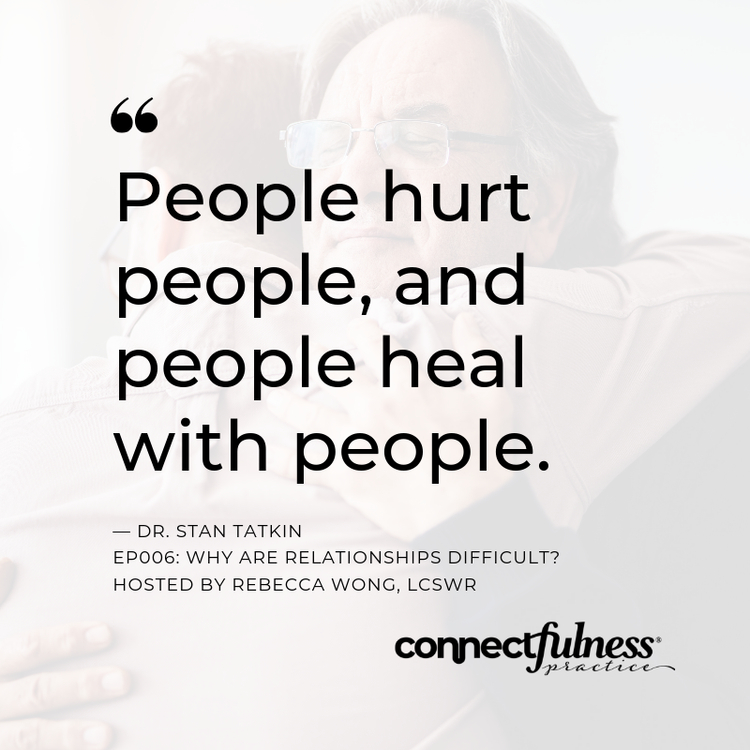
Who is Dr. Stan Tatkin?
Dr. Stan Tatkin is a clinician, teacher, author, and the founder/developer of PACT. His work has helped shape a body-based, attachment-informed approach to couple therapy that focuses on helping partners create a more secure-functioning relationship.
Dr. Tatkin is also the author of several well-known relationship books, including Wired for Love, We Do, and Wired for Dating.
How PACT Helps Couples
PACT helps couples slow down and better understand the patterns that keep them stuck. Many couples enter therapy believing the problem is communication, conflict, betrayal, distance, or repeated arguments. PACT looks beneath those issues to examine how each partner’s nervous system responds to stress, fear, threat, closeness, separation, and repair.
Through this approach, couples may learn how to:
- Recognize their automatic protective responses
- Understand each partner’s attachment needs and sensitivities
- Reduce threat and defensiveness during conflict
- Create safer, clearer communication
- Repair ruptures more quickly
- Build a relationship based on fairness, mutual protection, collaboration, and secure functioning
Why PACT Can Be Especially Helpful
PACT is often used with couples who feel caught in high-conflict, emotionally intense, or repetitive patterns. The model can be especially helpful when partners struggle to calm down, listen, reconnect, or feel emotionally safe with one another.
Rather than asking couples to simply “communicate better,” PACT helps partners understand what is happening between them moment by moment. This can create a deeper awareness of how each person contributes to the cycle and what the couple can do differently to protect the relationship.
PACT and Secure Functioning
A major goal of PACT is helping couples move toward secure functioning. Secure functioning means both partners actively care for the safety and well-being of the relationship. It emphasizes mutual responsibility, honesty, protection, repair, and working as a team.
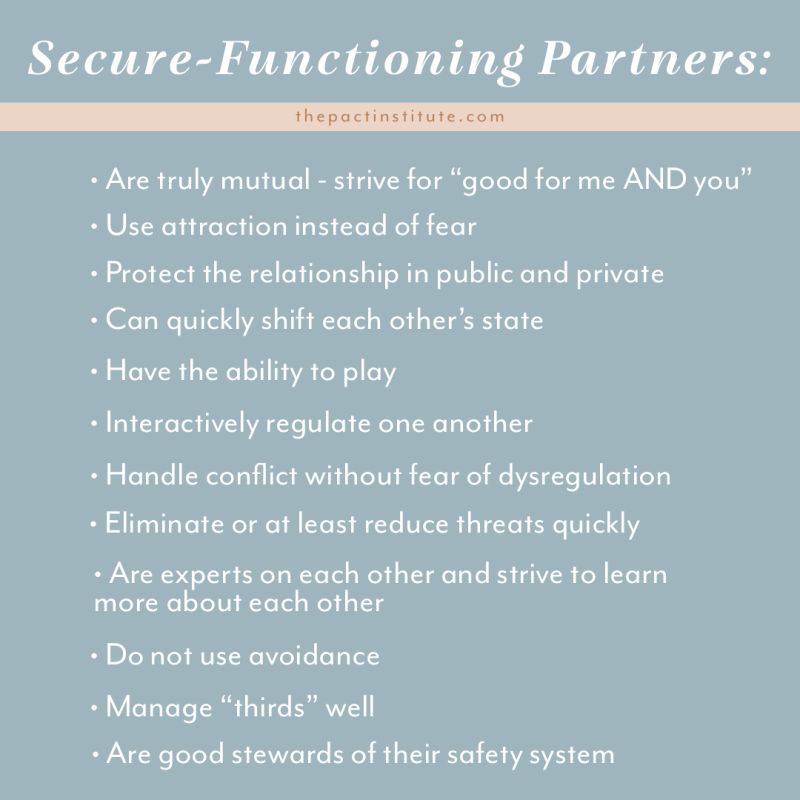
In this way, PACT does not place the focus on one “problem partner.” Instead, it helps the couple understand the relationship system they have created and how they can build a healthier, more secure one together.
Understanding Secure Functioning
One of the defining concepts of PACT is secure functioning. Unlike attachment style—which describes how we tend to relate to others based on our early experiences—secure functioning describes how two partners intentionally choose to operate together.
A secure-functioning relationship is built on the principles of:
- Mutual protection
- Fairness and justice
- Collaboration
- Reliability
- Emotional safety
- Transparency
- Shared responsibility
Rather than asking, “What do I need?”, secure-functioning partners also ask, “What helps protect us?”
PACT teaches that healthy relationships are intentionally created through repeated behaviors that increase safety, trust, and cooperation. Secure functioning is considered a relationship practice rather than a personality trait.
The Three Scientific Foundations of PACT
Attachment Theory
Attachment theory explains how our earliest caregiving relationships shape the ways we seek closeness, respond to conflict, and experience emotional safety in adult relationships.
PACT helps couples recognize how attachment patterns may influence:
- Fear of abandonment
- Emotional withdrawal
- Pursuing versus distancing
- Trust
- Intimacy
- Repair after conflict
Rather than labeling partners as “good” or “bad,” PACT helps each person understand the protective strategies they developed and how those strategies affect their relationship today.
Developmental Neuroscience
PACT incorporates findings from neuroscience to understand how the brain and nervous system respond to both connection and threat.
When partners become emotionally overwhelmed, the brain often shifts into survival mode. During these moments people may:
- Become defensive
- Shut down
- Become critical
- Fight
- Freeze
- Withdraw
- Lose access to thoughtful communication
PACT helps couples recognize these physiological responses and learn strategies that promote regulation before attempting to solve problems.
Arousal Regulation
One of the most unique aspects of PACT is its emphasis on regulating emotional arousal.
Instead of asking only, “What are you feeling?” PACT also asks:
- How activated is your nervous system?
- Can you remain emotionally present?
- Can you stay connected while under stress?
Couples learn to recognize when one or both partners have become dysregulated and practice techniques that restore calm, safety, and connection before continuing difficult conversations.
What Makes PACT Different?
While many forms of couples therapy focus primarily on communication skills, PACT focuses on what happens before communication even begins.
A PACT therapist observes:
- Facial expressions
- Eye contact
- Voice tone
- Body posture
- Micro-expressions
- Timing between partners
- Physiological signs of stress
- Automatic interaction patterns
These moment-to-moment observations often reveal relationship dynamics that neither partner consciously recognizes. This allows therapy to intervene where the conflict is actually occurring rather than only discussing it afterward.
The Couple Bubble®
One of Dr. Tatkin’s best-known concepts is the “Couple Bubble®.”
The Couple Bubble describes a relationship in which both partners intentionally create a sense of emotional safety, trust, and protection for one another.
Within a healthy Couple Bubble, partners strive to:
- Be emotionally available
- Protect one another from unnecessary stress
- Repair conflicts quickly
- Keep one another informed
- Prioritize the relationship
- Create a dependable emotional home base
The goal is not perfection. Instead, partners continually work to strengthen the sense that they are on the same team.
Common Relationship Patterns Addressed in PACT
PACT can help couples struggling with:
- Frequent conflict
- Emotional disconnection
- Betrayal and infidelity recovery
- Attachment injuries
- Trust rebuilding
- Communication difficulties
- Parenting stress
- Blended family challenges
- Life transitions
- Anxiety within relationships
- Emotional avoidance
- Intimacy concerns
Because PACT focuses on understanding the nervous system and attachment dynamics beneath these struggles, therapy often reaches deeper than simply teaching conflict-resolution skills.
PACT and Betrayal Trauma
Following infidelity or other significant relationship betrayals, many couples experience profound disruptions in trust, emotional safety, and attachment.
PACT offers a framework for understanding why betrayal affects both partners so deeply. The injured partner often experiences heightened nervous system activation, while the partner responsible for the betrayal may experience shame, defensiveness, or avoidance.
Therapy focuses on helping both individuals understand these responses while gradually rebuilding predictability, transparency, accountability, and emotional security. Rather than minimizing the impact of betrayal, PACT recognizes that healing requires repeated experiences of safety and trustworthy behavior over time.
PACT and Other Therapy Models
One strength of PACT is that it integrates well with many evidence-based therapeutic approaches. Therapists often combine PACT with:
- Internal Family Systems (IFS)
- Emotionally Focused Therapy (EFT)
- Gottman Method Couples Therapy
- EMDR
- Somatic therapies
- Cognitive Behavioral Therapy (CBT)
- Mindfulness-based interventions
- Trauma-informed therapy
Rather than replacing these approaches, PACT provides a psychobiological framework for understanding what occurs between partners in real time.
Learning More About PACT
If you’re interested in exploring PACT further, these resources are excellent starting points.
Official Websites
- The PACT Institute (official training organization)
https://www.thepactinstitute.com - Stan & Tracey Tatkin
https://www.stanandtraceytatkin.com
Online Learning
The PACT Institute offers:
- Therapist Certification Programs
- Foundations Courses
- Continuing Education
- Couples Workshops
- Secure Functioning Questionnaires
- Articles and Educational Blog Posts
- Relationship Retreats
- Professional Directory of Certified PACT Therapists
Recommended Videos & Podcasts
For those who prefer learning through audio or video, Dr. Tatkin has participated in numerous educational interviews covering attachment, neuroscience, conflict, and secure-functioning relationships.
Recommended topics include:
- What Is Secure Functioning?
- The Couple Bubble
- Attachment Styles in Relationships
- Fight Right: Conflict Through a Neuroscience Lens
- Wired for Love Workshops
- PACT Institute YouTube Channel
- Relationship School Podcast featuring Stan Tatkin
- Sounds True interviews and audio programs
Who Can Benefit from PACT?
PACT is appropriate for:
- Dating couples
- Engaged couples
- Married couples
- Long-term partners
- Couples recovering from betrayal
- Couples experiencing recurring conflict
- Parents navigating relationship stress
- Therapists seeking advanced training in couples therapy
Whether a relationship is in crisis or simply seeking greater connection, PACT offers practical tools grounded in neuroscience, attachment, and mutual care to help couples create relationships that are resilient, collaborative, and emotionally secure.
Books by Dr. Stan Tatkin
Dr. Stan Tatkin has written several influential books that make the principles of attachment theory, neuroscience, and secure-functioning relationships accessible to both clinicians and the general public. Whether you are looking to strengthen your current relationship, prepare for a healthy partnership, or deepen your understanding of PACT, these books are excellent resources.
In Each Other’s Care: A Guide to the Most Common Relationship Conflicts and How to Work Through Them (2022)
Dr. Tatkin’s newest book serves as a practical guide for navigating the conflicts that every couple encounters. Through real-world examples and actionable exercises, readers learn how to identify recurring relationship patterns, repair conflict more effectively, and build a secure, collaborative partnership.
Learn more: In Each Other’s Care
We Do: Saying Yes to a Relationship of Depth, True Connection, and Enduring Love (2018)
This book explores what it truly means to commit to another person. Dr. Tatkin explains how couples can intentionally create a “secure-functioning” relationship built on mutual protection, trust, fairness, and collaboration rather than simply relying on feelings of love.
Learn more: We Do
Wired for Dating: How Understanding Neurobiology and Attachment Style Can Help You Find Your Ideal Mate (2016)
Ideal for individuals who are dating or preparing for a long-term relationship, this book applies attachment science and neuroscience to choosing compatible partners, recognizing unhealthy patterns, and developing healthier relationships from the very beginning.
Learn more: Wired for Dating
Wired for Love: How Understanding Your Partner’s Brain and Attachment Style Can Help You Defuse Conflict and Build a Secure Relationship (2012)
Perhaps Dr. Tatkin’s best-known work, Wired for Love introduces readers to the foundations of PACT. It explains how attachment styles, brain functioning, and the nervous system influence romantic relationships while offering practical tools to reduce conflict and strengthen emotional security.
Learn more: Wired for Love
Your Brain on Love: The Neurobiology of Healthy Relationships
This audio program explores the neuroscience behind healthy attachment, emotional regulation, and lasting relationships. It is an excellent companion resource for those interested in the scientific foundations of PACT.
Learn more: Your Brain on Love
Additional Resources
- The PACT Institute – Official training organization founded by Dr. Stan Tatkin and Dr. Tracey Boldemann-Tatkin, offering therapist certification, workshops, educational resources, and a directory of PACT-trained therapists.
Learn more: The PACT Institute - Stan & Tracey Tatkin – Official website featuring books, relationship workshops, online courses, retreats, and educational videos focused on creating secure-functioning relationships.
Visit: Stan & Tracey Tatkin Official Website - PACT Therapy Article – Article onPACT Therapy: How It Works, Cost, & What to Expect from ChoosingTherapy.com
- Relationships & PACT Therapy Article – Dr. Stan Tatkin: Relationships & PACT Therapy from Thought Economics: A Journal of Intellectual Capital