Understanding Trauma Responses
Trauma responses are survival strategies the nervous system may use when a person feels overwhelmed, unsafe, threatened, trapped, or emotionally flooded. These responses are not character flaws or conscious choices — they are protective adaptations designed to help the body survive.
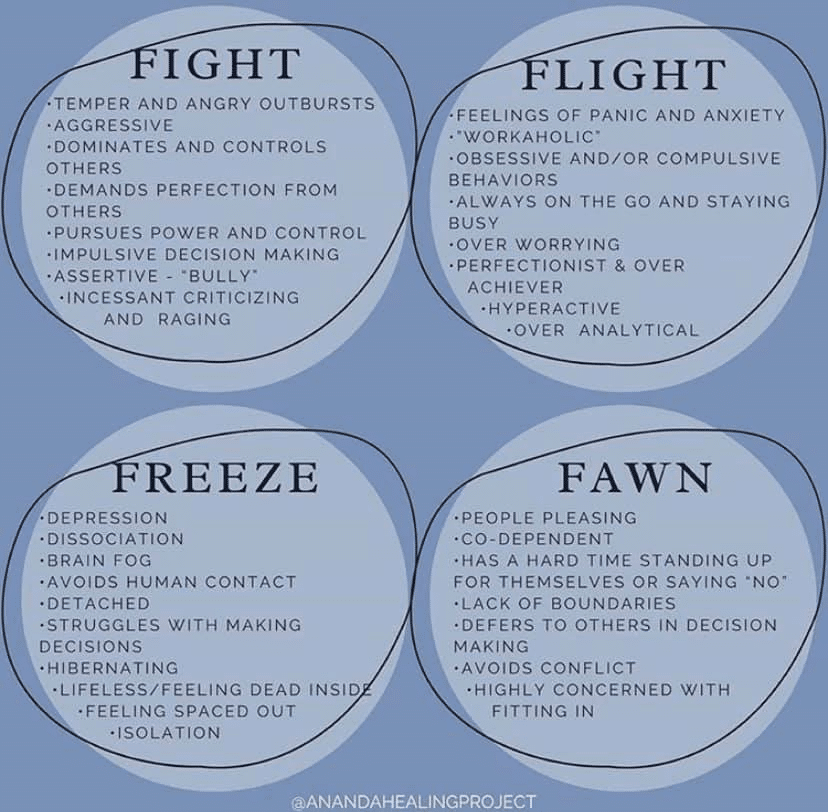
Common trauma responses include:
Fight
The fight response is the nervous system’s attempt to regain safety through confrontation, control, anger, defensiveness, or pushing back.
Signs may include:
- Irritability or rage
- Arguing or defensiveness
- Feeling the need to control situations
- Tension in the jaw, chest, or hands
- Difficulty calming down after conflict
The fight response can show up in many ways — not just physical aggression. Often, it is the nervous system trying to regain safety, control, protection, or power when a person feels threatened, cornered, vulnerable, rejected, criticized, or emotionally unsafe.
Examples can include:
- Snapping at people quickly
- Becoming argumentative or defensive
- Raising your voice during conflict
- Feeling intense irritation or rage
- Needing to “win” conversations
- Controlling situations or other people
- Being hypercritical of yourself or others
- Becoming confrontational when feeling hurt
- Slamming doors, throwing objects, or physical tension
- Feeling “ready for a fight” all the time
- Difficulty calming down after conflict
- Aggressive driving or road rage
- Becoming reactive to criticism or rejection
- Perfectionism rooted in fear of failure
- Bullying, intimidation, or emotional aggression
- Feeling physically activated:
- clenched jaw
- tight chest
- adrenaline rush
- racing heart
- shaking
- urge to yell or hit something
Sometimes fight responses are very subtle and internalized:
- Harsh self-talk
- Self-criticism
- “I can’t let anyone disrespect me”
- Feeling constantly on guard
- Overcompensating with dominance or achievement
- Anger covering sadness, fear, shame, or helplessness
Relationship Examples
A fight response may look like:
- Becoming defensive during difficult conversations
- Interrupting or talking over others
- Escalating quickly when feeling misunderstood
- Reacting strongly to perceived abandonment or criticism
- Feeling intense anger when vulnerable emotions arise
- Pushing people away before they can hurt you
Workplace Examples
At work, a fight response may appear as:
- Micromanaging
- Difficulty accepting feedback
- Overreacting to mistakes
- Becoming controlling during stress
- Perceiving neutral interactions as attacks
- Intense frustration when things feel out of control
Important Context
The fight response is often misunderstood as “anger problems,” but underneath it is usually a nervous system that learned:
- “I must protect myself.”
- “I am not safe.”
- “If I lose control, I’ll get hurt.”
- “Vulnerability is dangerous.”
For many people, fight responses developed in environments involving:
- chronic criticism
- emotional unpredictability
- abuse
- neglect
- bullying
- chaos
- unsafe attachment relationships
Understanding the response with compassion — rather than shame — is often an important part of healing.
Flight
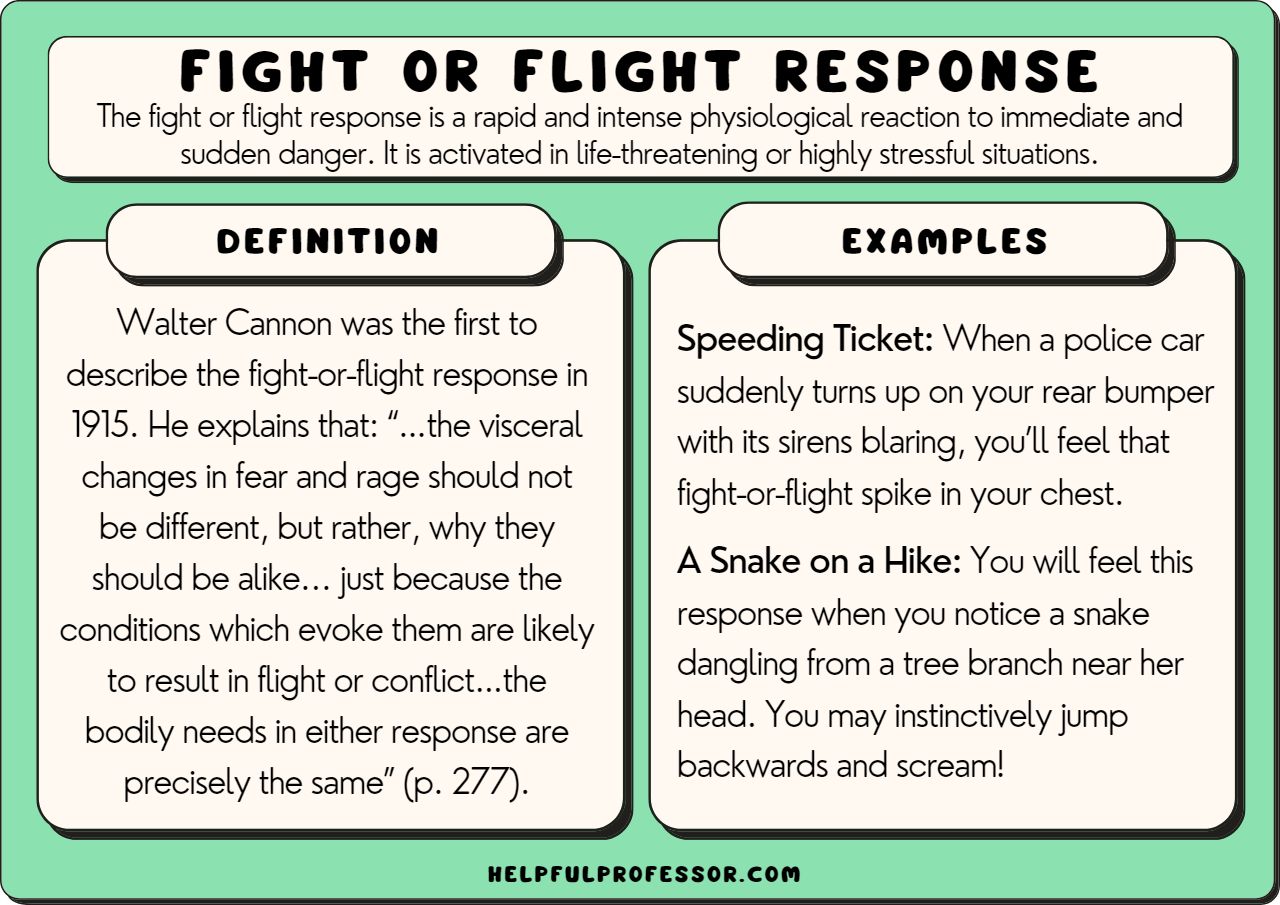
The flight response is the urge to escape, avoid, overwork, stay busy, or get away from emotional or physical discomfort.
Signs may include:
- Anxiety or panic
- Restlessness
- Overworking or over-planning
- Avoiding difficult conversations
- Feeling trapped or needing to leave
The flight response is the nervous system’s attempt to escape danger, discomfort, vulnerability, overwhelm, or emotional pain. While people often think of “running away” physically, flight responses are frequently psychological, emotional, behavioral, or productivity-based.
A person in flight mode may feel an intense need to:
- get away
- stay busy
- avoid discomfort
- outrun emotions
- stay in motion so they do not have to feel
Common examples include:
- Overworking or becoming a workaholic
- Constant busyness or inability to relax
- Excessive exercising
- Panic or anxiety
- Restlessness
- Feeling trapped easily
- Avoiding difficult conversations
- Leaving relationships before getting hurt
- Chronic procrastination
- Overplanning or overpreparing
- Excessive cleaning or organizing under stress
- Escaping into social media, gaming, shopping, or internet use
- Frequently changing jobs, hobbies, or relationships
- Feeling the urge to physically leave during conflict
- Difficulty sitting still
- Racing thoughts
- Hyper-independence (“I’ll do everything myself”)
Physical Signs of Flight Response
The body may feel:
- jittery
- wired
- tense
- energized but overwhelmed
- unable to settle down
Other physical symptoms can include:
- rapid heartbeat
- shallow breathing
- stomach discomfort
- adrenaline surges
- trouble sleeping
- muscle tension
Relationship Examples
Flight responses in relationships may look like:
- Avoiding emotional intimacy
- Shutting down during hard conversations
- Distracting instead of processing emotions
- Staying emotionally unavailable
- Pulling away when relationships deepen
- Ghosting or disappearing after conflict
- Keeping life “too busy” for vulnerability
Workplace Examples
At work, flight response may appear as:
- Perfectionism
- Overachievement
- Constant multitasking
- Difficulty resting or taking breaks
- Anxiety when not being productive
- Feeling guilty while relaxing
- Burnout from nonstop activity
Sometimes high achievement is partially driven by a nervous system that learned:
- “If I stop, something bad will happen.”
- “I must stay ahead.”
- “I can’t let my guard down.”
- “Being still is unsafe.”
Emotional Experience
Underneath flight responses, people may be trying to escape:
- fear
- shame
- grief
- vulnerability
- loneliness
- rejection
- helplessness
For many individuals, flight patterns develop in environments where slowing down, expressing emotions, or depending on others did not feel emotionally safe.
The nervous system learns:
- movement = safety
- achievement = safety
- distraction = safety
- escape = survival
Understanding flight responses through a trauma-informed lens can help reduce shame and create space for healthier regulation, rest, connection, and emotional processing.
Freeze
The freeze response occurs when the nervous system becomes overwhelmed and the body temporarily shuts down or becomes immobilized.
Signs may include:
- Feeling stuck or numb
- Trouble speaking or making decisions
- Mental blankness
- Low energy or heaviness
- Feeling disconnected from the present moment
The freeze response happens when the nervous system becomes overwhelmed and shifts into immobilization, shutdown, numbness, or “stuckness.” Instead of fighting or escaping, the body conserves energy and attempts to survive by becoming still, disconnected, or inactive.
Freeze is often misunderstood as laziness, avoidance, or lack of motivation, but it is frequently a protective survival response.
Common examples include:
- Feeling mentally or physically “stuck”
- Going blank during stress or conflict
- Not knowing what to say
- Difficulty making decisions
- Procrastination that feels paralyzing
- Wanting to act but feeling unable to start
- Emotional numbness
- Shutting down during arguments
- Avoiding emails, texts, or responsibilities because they feel overwhelming
- Spending long periods scrolling, zoning out, or staring into space
- Feeling detached from emotions
- Isolating from others
- Sleeping excessively
- Difficulty completing simple tasks
- Feeling frozen when criticized or confronted
- “I know what I should do, but I can’t make myself do it”
Physical Signs of Freeze Response
The body may experience:
- heaviness
- exhaustion
- numbness
- slowed movement
- shallow breathing
- low energy
- muscle weakness
- dissociation
- brain fog
Some people describe freeze as:
- “shutting down”
- “checking out”
- “feeling trapped inside myself”
- “my brain stops working”
Relationship Examples
Freeze in relationships may look like:
- Becoming silent during conflict
- Not expressing needs or feelings
- Avoiding confrontation because the body shuts down
- Feeling unable to leave unhealthy situations
- Agreeing with others because speaking up feels impossible
- Disconnecting emotionally when overwhelmed
Someone may later think:
- “Why didn’t I say something?”
- “Why couldn’t I respond?”
- “I just froze.”
Workplace Examples
At work, freeze response may appear as:
- Difficulty starting tasks
- Feeling overwhelmed by small responsibilities
- Blankness during meetings or presentations
- Avoiding communication because it feels too stressful
- Inability to prioritize under pressure
- Productivity crashes after stress
Emotional Experience Beneath Freeze
Under freeze responses, people often experience:
- overwhelm
- helplessness
- fear
- shame
- emotional overload
- hopelessness
The nervous system may have learned:
- “Nothing I do will help.”
- “It’s safer not to move.”
- “If I stay still, maybe I’ll survive.”
- “Action feels dangerous.”
Freeze responses commonly develop in situations involving:
- chronic overwhelm
- abuse
- emotional neglect
- feeling trapped
- unpredictable environments
- experiences where escape or fighting was not possible
Freeze vs. Dissociation
Freeze and dissociation can overlap.
- Freeze is more about immobilization or shutdown.
- Dissociation involves disconnection from emotions, the body, memory, or reality.
Many people experience both together during high stress or trauma activation.
Understanding freeze through a nervous system lens can help reduce shame and support healing through safety, regulation, connection, and gradual re-engagement with the body and environment.
Fawn
The fawn response involves people-pleasing, minimizing one’s own needs, or prioritizing another person’s comfort to avoid conflict, rejection, punishment, or abandonment.
Signs may include:
- Saying yes when you want to say no
- Apologizing excessively
- Avoiding conflict at all costs
- Feeling responsible for others’ emotions
- Losing touch with your own wants or boundaries
Dr. Ingrid Clayton’s work focuses specifically on fawning and complex trauma. Her book Fawning: Why the Need to Please Makes Us Lose Ourselves explores why fawning develops, how it appears in relationships, and how survivors can reconnect with their voice and sense of self.
The fawn response is a trauma response centered around people-pleasing, self-abandonment, conflict avoidance, and prioritizing others’ needs or emotions in order to maintain safety, approval, connection, or stability.
Instead of fighting, fleeing, or freezing, the nervous system attempts to survive by:
- appeasing
- accommodating
- caretaking
- pleasing
- staying “easy”
- avoiding rejection or anger
Fawning is often rooted in the belief:
- “If I keep others happy, I’ll stay safe.”
- “My needs are less important.”
- “Conflict is dangerous.”
- “I have to earn love, connection, or safety.”
Common examples include:
- Saying yes when you want to say no
- Difficulty setting boundaries
- Excessive apologizing
- Avoiding conflict at all costs
- Feeling responsible for others’ emotions
- Becoming who others want you to be
- Overexplaining yourself
- Fear of disappointing people
- Constantly seeking approval or reassurance
- Ignoring your own needs to care for others
- Staying agreeable even when uncomfortable
- Smiling or acting “fine” when distressed
- Difficulty expressing anger
- Feeling guilty for having needs
- People-pleasing to avoid rejection or abandonment
- Taking care of everyone else while neglecting yourself
Relationship Examples
Fawn responses in relationships may look like:
- Walking on eggshells
- Changing opinions to avoid conflict
- Staying in unhealthy relationships
- Overfunctioning or overgiving
- Suppressing feelings to “keep the peace”
- Feeling anxious when someone is upset with you
- Prioritizing another person’s comfort over your safety
- Quickly forgiving harmful behavior to restore connection
A person may think:
- “I just don’t want problems.”
- “I don’t want them to be mad at me.”
- “If I speak up, I’ll lose them.”
- “I should just be grateful.”
Workplace Examples
At work, fawn response may appear as:
- Taking on too much work
- Difficulty saying no to requests
- Fear of authority figures
- Overworking for validation
- Avoiding disagreement with coworkers or supervisors
- Becoming overly accommodating
- Feeling intense anxiety about disappointing others
Emotional Experience Beneath Fawning
Underneath fawning, people often experience:
- fear
- shame
- abandonment anxiety
- hypervigilance
- low self-worth
- emotional insecurity
Many people who fawn learned early that:
- love was conditional
- conflict felt unsafe
- emotional needs were ignored or punished
- caretaking others created safety
- pleasing others reduced harm
Fawning commonly develops in environments involving:
- emotional unpredictability
- criticism
- controlling caregivers
- abuse
- neglect
- enmeshment
- emotionally immature relationships
Important Distinction
Being kind, caring, cooperative, or empathetic is not automatically fawning.
Fawning becomes a trauma response when:
- self-abandonment is involved
- boundaries disappear
- fear drives the behavior
- authenticity is sacrificed for safety or approval
Healing From Fawning
Healing often involves learning:
- boundaries
- self-trust
- emotional regulation
- safe conflict
- assertiveness
- reconnecting with personal wants, needs, and identity
Dr. Ingrid Clayton
- Book: Fawning: Why the Need to Please Makes Us Lose Ourselves
- Focus: Fawning, complex trauma, people-pleasing, self-abandonment, and reclaiming the self
- Website: Dr. Clayton’s site includes books and resources related to trauma recovery. Dr. Ingrid Clayton’s work on fawning and complex trauma is a valuable resource for understanding these patterns and rebuilding a stronger sense of self. LINK TO WEBSITE: https://www.ingridclayton.com/
Polyvagal Theory Chart of Trauma Response
Polyvagal Theory is a framework developed by Dr. Stephen Porges that explains how the nervous system responds to safety, danger, and life threat. It’s often used in trauma therapy to help people understand emotional and physical reactions that happen automatically.
The Core Idea: Your nervous system is constantly scanning for cues of: Safety, Danger, and Life threat.
This process is called neuroception — your body’s unconscious detection system.
Depending on what your nervous system detects, it shifts into different states.
The Three Main Nervous System States
1. Ventral Vagal State (Safety & Connection)
Bottom green section – This is the regulated, healthy state.
How it feels:
- Calm
- Grounded
- Present
- Connected to others
- Curious
- Compassionate
What the body is doing:
- Digestion works well
- Breathing is steady
- Social engagement is possible
- You can think clearly
This is the “I am safe” state.
The Polyvagal chart calls this:
Social Engagement
Associated with the:
Ventral Vagal Complex
(part of the parasympathetic nervous system)
2. Sympathetic State (Fight or Flight)
Middle yellow section – When the nervous system senses danger, it activates survival energy.
Fight responses:
- Anger
- Irritation
- Frustration
- Rage
Flight responses:
- Anxiety
- Panic
- Fear
- Worry
What the body is doing:
- Heart rate increases
- Adrenaline rises
- Muscles prepare for action
- Hyper-alertness
This is:
“Something is wrong — I need to act.”
The Polyvagal chart labels this:
Sympathetic (Danger / Hyperarousal)
3. Dorsal Vagal State (Shutdown / Collapse)
Top red section – When the nervous system perceives overwhelming threat or helplessness, it may shut down to conserve energy.
How it can feel:
- Numbness
- Depression
- Dissociation
- Hopelessness
- Shame
- Disconnection
- “Going through the motions”
Severe forms:
- Collapse
- Immobilization
- Suicidal feelings
What the body is doing:
- Reduced energy
- Emotional shutdown
- Lower engagement with the world
This is:
“I cannot escape or survive this.”
The Polyvagal chart labels this:
Dorsal Vagal (Life Threat / Hypoarousal)
Freeze State
The orange band between sympathetic and dorsal vagal is:
Freeze
Freeze is often a combination of:
- High activation (fear/panic)
- Plus immobilization
So a person may feel:
- Stuck
- Unable to act
- Alert but paralyzed
The Polyvagal chart calls this:
Hybrid of Sympathetic & Dorsal Vagal
The Black Curve
The black curve shows rising nervous system arousal. It illustrates how someone may move:
- From safety
- Into fight/flight
- Into overwhelm
- Then into shutdown
The “deactivation” arrow shows the nervous system losing energy after prolonged stress.
Right Side Panels: Body Effects
The right side explains how each state affects body systems.
Sympathetic activation increases:
- Heart rate
- Blood pressure
- Adrenaline
- Defensive behavior
And decreases:
- Digestion
- Relaxation
- Social connection
Dorsal vagal shutdown increases:
- Immobilization
- Numbing
- Conservation of energy
And decreases:
- Muscle tone
- Facial expression
- Social behavior
Ventral vagal safety increases:
- Digestion
- Immune function
- Social bonding
- Calm breathing
- Ability to connect
And decreases:
- Defensive responses
Why This Matters in Trauma
The Polyvagal chart emphasizes that trauma responses are:
- Automatic nervous system survival responses
- Not character flaws or conscious choices
Someone may:
- Lash out (fight)
- Avoid (flight)
- Freeze
- Shut down emotionally
because their nervous system believes survival is at stake.
Important Takeaway
Polyvagal Theory reframes reactions like:
- Anxiety
- Dissociation
- Emotional numbness
- Hypervigilance
- Panic
as adaptive survival mechanisms rather than personal weakness.
The goal in many trauma therapies is helping the nervous system:
- feel safe again,
- return to ventral vagal regulation,
- and build flexibility between states rather than getting stuck in survival modes.
Polyvagal Theory Resources:
- Polyvagal Trauma Traffic Light Worksheet
The “Polyvagal Trauma Traffic Light Worksheet” provided on this website is shared solely as an educational and informational resource for public use. This material is not my original work product, and I do not claim ownership, authorship, or copyright of the worksheet or its contents. All rights, ownership, and intellectual property remain with the original creator and/or copyright holder. Full credit belongs to the worksheet’s author/owner.
2. PowerPoint presentation Polyvagal Theory In Action: Harnessing the Healing Potential of the Autonomic Nervous System (Psychotherapy Networker Symposium, March 22, 2019) by Deb Dana, LCSW
Resource Attribution Notice The PowerPoint presentation Polyvagal Theory In Action: Harnessing the Healing Potential of the Autonomic Nervous System (Psychotherapy Networker Symposium, March 22, 2019) by Deb Dana, LCSW, is shared on this website solely as an educational and informational resource for public use. This presentation is not my original work product, and I do not claim ownership, authorship, or copyright of the slides or their contents. All rights, ownership, and intellectual property remain with Deb Dana, LCSW, and the original copyright holder(s). Full credit belongs to the original creator: Deb Dana, LCSW ; debdanalcsw.com ; rhythmofregulation.com
3. Relax…Re-engage…Return to Regulation: Engaging the Vagal Brake by Deb Dana
Resource Attribution Notice The resource Relax…Re-engage…Return to Regulation: Engaging the Vagal Brake is shared on this website solely as an educational and informational resource for public use. This material is not my original work product, and I do not claim ownership, authorship, or copyright of the resource or its contents. All rights, ownership, and intellectual property remain with the original creator and copyright holder. Copyright © Deb Dana, 2020 Full credit belongs to Deb Dana and the original copyright owner.
Attachment Styles
Attachment styles are patterns of how people emotionally bond, connect, and respond in relationships. They develop primarily in early childhood through interactions with caregivers, but they can also be shaped by later relationships and life experiences. Attachment theory was originally developed by psychologist John Bowlby and later expanded by Mary Ainsworth.
The 4 Main Attachment Styles
1. Secure Attachment
People with secure attachment generally feel:
- Comfortable with closeness
- Able to trust others
- Able to communicate needs
- Emotionally balanced during conflict
Common traits:
- Healthy boundaries
- Emotional openness
- Resilience in relationships
- Ability to both give and receive support
Usually develops when: Caregivers were generally responsive, safe, and emotionally available.
2. Anxious (Preoccupied) Attachment
People with anxious attachment often fear abandonment or rejection.
Common traits:
- Overthinking relationships
- Seeking reassurance frequently
- Sensitivity to distance or inconsistency
- Fear of being “too much”
- Emotional highs and lows
Core nervous system feeling:
“Will you leave me?”
Often develops when: Caregivers were inconsistent — sometimes nurturing, sometimes unavailable.
3. Avoidant (Dismissive) Attachment
People with avoidant attachment tend to minimize emotional dependence.
Common traits:
- Difficulty expressing vulnerability
- Strong independence
- Discomfort with emotional closeness
- Pulling away during conflict
- Suppressing emotions
Core nervous system feeling:
“I can only rely on myself.”
Often develops when: Caregivers were emotionally distant, rejecting, or discouraged emotional expression.
4. Disorganized (Fearful-Avoidant) Attachment
This style combines both anxious and avoidant tendencies.
People may:
- Crave closeness
- But also fear it
- Feel unsafe in relationships
- Experience intense emotional confusion
Common traits:
- Push-pull dynamics
- Fear of abandonment and fear of intimacy
- Difficulty trusting
- Emotional dysregulation
- Trauma-related reactions
Core nervous system feeling:
“Connection feels dangerous.”
Often develops when: Caregivers were frightening, abusive, chaotic, or deeply inconsistent.
Connection to Polyvagal Theory
Attachment styles are closely tied to nervous system regulation.
For example:
- Secure attachment is associated with more ventral vagal safety
- Anxious attachment often involves sympathetic activation (hypervigilance)
- Avoidant attachment may involve partial emotional shutdown
- Disorganized attachment can involve rapid switching between fight/flight and shutdown
Can Attachment Styles Change?
Yes. Attachment styles are not permanent labels.
People can develop:
- “Earned secure attachment”
through: - therapy
- healthy relationships
- nervous system regulation
- self-awareness
- consistent emotional safety
Attachment Project Quiz
The Attachment Project offers a popular free attachment style quiz here:
🔗 https://www.attachmentproject.com/attachment-style-quiz/
And their overview page:
🔗 https://www.attachmentproject.com/blog/four-attachment-styles/
The quiz is informational rather than diagnostic, but many people find it useful for identifying patterns in relationships and emotional regulation.
Attribution:
© Laney Knowlton. All Rights Reserved.
RESOURCES:
Attribution:
© Laney Knowlton. All Rights Reserved.
Attribution:
© Laney Knowlton. All Rights Reserved.
Resource Attribution Notice: The resource Traumatic Memory and Neurodevelopment (Plenary Address presented at the EMDRIA Conference, 2002) by Bruce D. Perry, MD, PhD, is shared on this website solely as an educational and informational resource for public use. This material is not my original work product, and I do not claim ownership, authorship, or copyright of the presentation or its contents. All rights, ownership, and intellectual property remain with Bruce D. Perry, MD, PhD, and the original copyright holder(s). Full credit belongs to the original creator and presenter:Bruce D. Perry, MD, PhD Plenary Address — EMDRIA Conference, 2002
Resource Attribution Notice: Excerpts and notes from Traumatic Attachment and the Development of the Right Brain, a Plenary Address presented by Allan N. Schore, Ph.D. at the EMDRIA Conference on September 9, 2000, are shared on this website solely as an educational and informational resource. These excerpts/notes are not my original work product, and I do not claim ownership, authorship, or copyright of the original presentation content or concepts. All rights, ownership, and intellectual property remain with Allan N. Schore, Ph.D., and the original copyright holder(s). Full credit belongs to the original creator and presenter: Allan N. Schore, Ph.D. Plenary Address — EMDRIA Conference
September 9, 2000
Understanding the Karpman Drama Triangle
The Karpman Drama Triangle is a psychological and relationship model developed by psychiatrist Dr. Stephen Karpman in 1968. It describes unhealthy interaction patterns that people can unconsciously fall into during conflict, stress, trauma, or emotionally charged relationships.
The triangle identifies three common roles:
- Victim
- Rescuer
- Persecutor
People can move rapidly between these roles, often without realizing it.
Attribution:
© Laney Knowlton. All Rights Reserved.
The Three Roles
1. Victim
The Victim role feels:
- powerless
- overwhelmed
- helpless
- misunderstood
- stuck
Common beliefs:
- “Nothing ever works out for me.”
- “I can’t do this.”
- “Someone needs to save me.”
The Victim role is not about actual victimization or trauma. It refers to a mindset of feeling unable to act or take responsibility for change.
Behaviors may include:
- Avoiding responsibility
- Seeking rescue
- Feeling hopeless
- Emotional dependency
2. Rescuer
The Rescuer steps in to “save” others, often at the expense of their own needs.
Common beliefs:
- “It’s my job to fix this.”
- “People need me.”
- “If I don’t help, things will fall apart.”
Behaviors may include:
- Over-helping
- People-pleasing
- Difficulty setting boundaries
- Taking responsibility for others’ emotions
- Giving advice without being asked
Although rescuing can appear caring, it can unintentionally reinforce helplessness in others.
3. Persecutor
The Persecutor role uses criticism, blame, control, anger, or intimidation.
Common beliefs:
- “This is your fault.”
- “People are incompetent.”
- “I need control.”
Behaviors may include:
- Criticism
- Judgment
- Shaming
- Controlling behavior
- Aggression or defensiveness
The Persecutor often acts from fear, frustration, or unmet emotional needs.
How the Triangle Works
The roles are fluid. A person may start in one role and quickly shift into another.
Example:
A partner feels overwhelmed (Victim).
Their spouse tries to fix everything (Rescuer).
The spouse becomes resentful and critical (Persecutor).
Then the original partner feels attacked and becomes the Victim again.
This cycle can continue repeatedly unless awareness interrupts it.
Why the Drama Triangle Matters
The Karpman Triangle is common in:
- family systems
- romantic relationships
- workplaces
- caregiving relationships
- trauma dynamics
- codependency patterns
It often develops when people:
- lack healthy boundaries
- struggle with emotional regulation
- fear abandonment or rejection
- learned unhealthy relational patterns early in life
Trauma and the Drama Triangle
People with unresolved trauma or insecure attachment patterns may enter these roles automatically as survival strategies.
For example:
- An anxious attachment style may lean toward Rescuer or Victim roles.
- A defensive nervous system may shift into Persecutor behaviors.
- Chronic shame can reinforce Victim identity.
The triangle is not about “bad people.” It describes unconscious coping patterns.
Moving Beyond the Drama Triangle
Healing involves stepping out of reactive roles and into healthier ways of relating.
This may include:
- setting boundaries
- taking responsibility for emotions
- asking directly for support
- allowing others to solve their own problems
- practicing self-awareness
- developing nervous system regulation
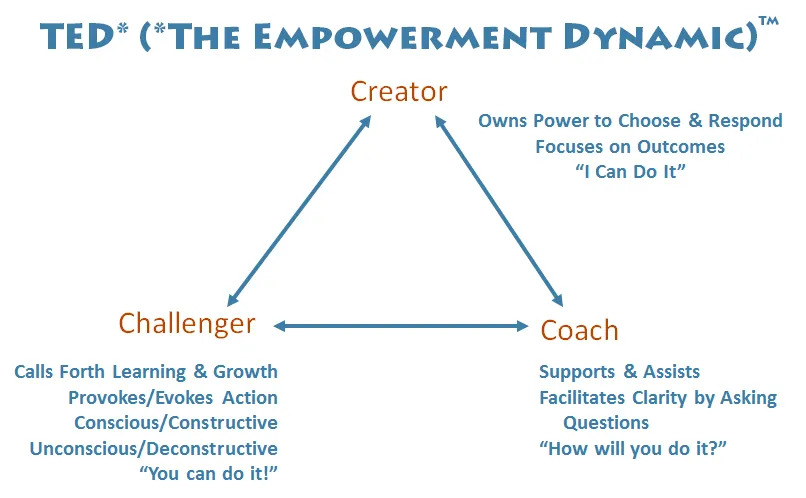
The Empowerment Alternative
Therapist David Emerald later developed a healthier model called The Empowerment Dynamic (TED):
| Drama Triangle | Empowerment Alternative |
|---|---|
| Victim | Creator |
| Rescuer | Coach |
| Persecutor | Challenger |
The goal is to move from blame and reactivity toward:
- accountability
- empowerment
- collaboration
- emotional maturity
WEBSITE LINK: https://powerofted.com/
Key Takeaway
The Karpman Drama Triangle helps explain how unhealthy relational dynamics repeat themselves. By recognizing these roles, people can begin to develop healthier communication, stronger boundaries, and more conscious relationships.
Karpman Drama Triangle Resources:
- Official Karpman Drama Triangle Website – https://karpmandramatriangle.com/
- A Game Free Life: The definitive book on the Drama Triangle and Compassion Triangle by the originator and author. The new transactional analysis of intimacy, openness, and happiness by Stephen B. Karpman
- Official The Empowerment Dynamic Website – https://theempowermentdynamic.com/
- The Power of TED* (*The Empowerment Dynamic) by David Emerald and Robert Lanphear